Welcome back to our latest edition of Market Insights with Sanjeev Kaushik.
In this edition, we will break down what’s happening with U.S. debt, why it matters, and what scenarios could play out if the world’s largest economy finds itself unable to keep borrowing the way it has.
Let’s dive in…
1. Can the U.S. Afford Its Future?
Every few months, headlines flare up about America’s “unsustainable” debt. Numbers get thrown around in the trillions, politicians argue, and investors wonder what it all means for markets, the economy, and their own portfolios.
Here’s the truth: U.S. debt has been growing for decades, and yet the system has kept running smoothly. But today, the math is shifting. Interest payments are climbing, growth isn’t guaranteed, and the question of debt sustainability is no longer academic, it’s real.
1.1 Debt Today vs. Debt 20 Years Ago
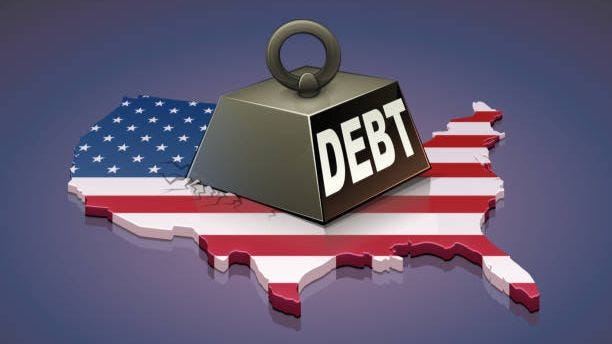
Twenty years ago, U.S. debt held by the public was around 60% of GDP. Today, it’s close to 100%. That means the country now owes about as much as it produces in an entire year.
Why? Two big reasons:
- The 2008 Global Financial Crisis: Massive government spending to rescue the economy.
- COVID-19 pandemic: Trillions more spent on stimulus checks, unemployment aid, vaccines, and economic relief.
Deficits (the yearly gap between spending and revenue) are expected to stay high for at least another decade, according to the Congressional Budget Office (CBO).
For years, the U.S. could borrow cheaply. Low interest rates meant that even though debt was climbing, the interest burden stayed manageable.
But now rates have gone back up toward historical norms. That changes everything.
By 2050, interest payments could eat up more than a third of government revenue. If interest costs rise faster than the economy grows, debt becomes a runaway problem, even if the government stops adding new deficits.
1.2 Will Investors Stop Buying U.S. Treasuries?
Some worry about a “flight from Treasuries,” where investors suddenly lose confidence in U.S. bonds. That’s unlikely. Here’s why:
- The U.S. borrows in its own currency (the dollar): Unlike many emerging markets that borrow in foreign currencies.
- The U.S. dollar dominates global finance: Treasuries are still the safest, most liquid debt market in the world.
- Alternatives are scarce: There’s no other country that can issue as much debt, in as deep a market, in a stable global currency.
So the world isn’t about to ditch Treasuries. But yields (the interest the U.S. must pay to borrow) may stay higher than before, reflecting investors demanding a “risk premium” for holding so much U.S. debt.
1.3 What If U.S. Debt Really Does Become Unsustainable?

If the debt-to-GDP ratio keeps climbing, the U.S. has four main ways to get it back under control:
1.3.1 Higher Inflation
Inflation reduces the real value of debt, since the dollars owed lose purchasing power over time. The benefit is that the debt burden shrinks more quickly and a weaker dollar can help exports.
But the downside is significant: Inflation erodes consumer and business confidence, and interest rates eventually rise to stabilize prices, wiping out much of the advantage. If inflation spirals, trust in the U.S. dollar could weaken. Italy tried this approach after World War II; while it offered temporary relief, it eventually led to stagflation, weak growth, and a collapsing currency.
1.3.2 Financial Repression
Here the government and the Federal Reserve engineer a system that keeps interest rates lower than growth rates for an extended period. This could mean the Fed capping long-term yields, the government issuing more short-term debt, or banks being pushed to buy Treasuries, while central banks purchase large amounts of debt themselves.
The upside is that it keeps borrowing affordable, but it risks undermining the Fed’s independence and driving investors away if they believe the system is manipulated. It can also mask hidden inflation pressures. Japan has managed this approach, but its unique demographics, a high savings rate, low wages, and an aging population, make it hard to replicate in the U.S.
1.3.3 Austerity
The harshest route is austerity, viz. cutting spending or raising taxes. The challenge is that most of the U.S. budget is tied up in Medicare, Social Security, and defense, all politically sensitive. Smaller programs make up too little to move the needle.
Historically, austerity happens only under market pressure, as seen in the U.K. and France when bond yields spiked. For the U.S., this would likely mean higher taxes, gradual increases in retirement ages, and reduced benefits; measures no politician will embrace until forced.
1.3.4 Higher Growth
If the economy expands faster than debt, the debt ratio shrinks naturally. Growth could come from AI, robotics, and other productivity-boosting technologies, or from continued U.S. leadership in innovation.

Advances that lower costs, much like electricity or semiconductors did in the past, could also help. If productivity gains from AI are strong, the debt challenge becomes far more manageable. But if growth disappoints, the problem lingers.
1.4 Where Do We Go From Here?

Right now, the U.S. is not facing an imminent debt crisis. Investors still see Treasuries as the safest asset in the world.
But the path forward could look like this:
- Short-term: More inflation and financial repression to keep debt affordable.
- Medium-term: Rising pressure for spending cuts or tax hikes (austerity).
- Long-term: Hope for productivity-driven growth (AI, technology, innovation).
The outcome will likely be a mix of all four. Inflation and financial repression could buy time. Austerity may eventually be unavoidable. And growth is the ultimate wild card.